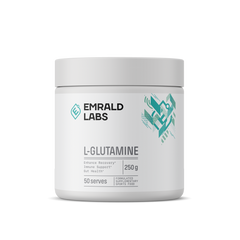

Glutamine has risen and fallen in popularity throughout the years. It is one of the most abundant amino acids in the body and in food, and it is commonly used by those who are training hard or looking to support their general wellbeing. As with any supplement, the question is whether you are getting enough from your diet alone, and whether supplementing could be a useful addition to your routine.
What is L-Glutamine?
L-Glutamine is the most abundant amino acid in the body. Amino acids are essentially the building blocks of protein and play a role in many of the body's everyday functions. Some amino acids are produced by the body, and some need to be consumed through food. Glutamine is naturally produced in the body and can also be found in many food sources. So why take a Glutamine supplement?
What Does L-Glutamine Do?
As the most abundant amino acid, L-Glutamine plays many roles in the body. It is involved in intestinal health and is commonly used by those looking to support their general digestive wellbeing. It also plays a role in normal immune system function. Due to its presence in muscle tissue, it is a popular addition to post-workout formulas, which is why we include it in our 100% Whey.
Benefits of L-Glutamine
There are three key areas where people commonly incorporate Glutamine into their routine.
Gut Health
Glutamine plays a role in maintaining the gut lining. The intestines strike a delicate balance between being permeable enough to allow nutrients to pass through for absorption and keeping waste material contained. Supporting your intestinal health through diet, lifestyle and supplementation is something many people actively focus on as part of a general wellness routine.
Immune Health
Glutamine is one of the key components involved in Glutathione production, a compound that plays a role in normal immune function. During times of physical stress, Glutamine stores in the body can become depleted, which is why it is commonly used by athletes and those with active lifestyles as part of their daily supplement routine.
Muscle Recovery
As the most plentiful amino acid in the body, Glutamine is commonly included in post-workout formulas to complement recovery between training sessions. Replenishing your Glutamine stores after exercise is a popular practice among those who train regularly.
Why is L-Glutamine Commonly Used?
Although L-Glutamine is naturally produced in the body, there are certain times when the body uses more of it, such as during periods of physical stress or intense exercise. For this reason, taking an L-Glutamine supplement is a common practice among athletes and active individuals. It is also commonly used by those focused on supporting their general gut health and digestive comfort as part of an everyday wellness routine.
L-Glutamine Food Sources
L-Glutamine can be found in protein sources, both animal-derived and plant-based, as well as certain vegetables and herbs:
- Meat
- Seafood
- Milk
- Nuts
- Eggs
- Yoghurt
- Cabbage
- Beans
- Dark leafy greens
- Asparagus
- Parsley
Because Glutamine is found in such a wide variety of foods, most people will be getting some through their diet already. Supplementation is simply a convenient way to top up your intake, particularly during periods of intense training or physical stress.

Glutamine vs L-Glutamine
Glutamine is an umbrella term for two types: L-Glutamine and D-Glutamine. L-Glutamine is the form found in food sources and is the one the body uses. D-Glutamine is considered largely unimportant for living organisms. So when we talk about Glutamine, we are talking about L-Glutamine.
How Much L-Glutamine Should I Take?
Because Glutamine is found naturally in many foods, supplementation really depends on how much you are eating and how hard your body is working. It is estimated we consume 3 to 6 grams through our daily diet, and a supplementation dose of around 5g on top of this is a commonly used benchmark. As always, we recommend speaking with a healthcare professional before starting any new supplement.
When to Take L-Glutamine
Many people find that taking Glutamine after a workout works well for their routine, as this is when the body's stores may be lower following exercise. If you are taking L-Glutamine to support gut health, the morning is a popular time to take it. Timing is not critical though, so as long as you are consistent you can take it any time of day.
Does L-Glutamine Have Side Effects?
Taking L-Glutamine supplements as recommended is generally well tolerated, given that L-Glutamine is already found in many everyday food sources. While uncommon, taking high doses may cause unwanted effects in some individuals. We recommend sticking to a 5 to 10g dosage per day. If you experience any adverse effects, discontinue use and consult your healthcare professional.
Because of its role in many of the body's everyday functions, L-Glutamine is a popular supplement among those who are training regularly, focused on gut health, or simply looking to support their general wellbeing.
You can purchase L-Glutamine right here in 250g or 500g tubs.
Always read the label and follow the directions for use. If symptoms persist, consult your healthcare professional.